Reliability
Jeep Cherokee reliability: how dependable is it really?
What Jeep Cherokee owners actually report, by year, plus what MOT data tells us about its reliability.
Updated 4th September 2026 DVSA data: Across 8,343 recorded MOT tests, 26.9% failed.
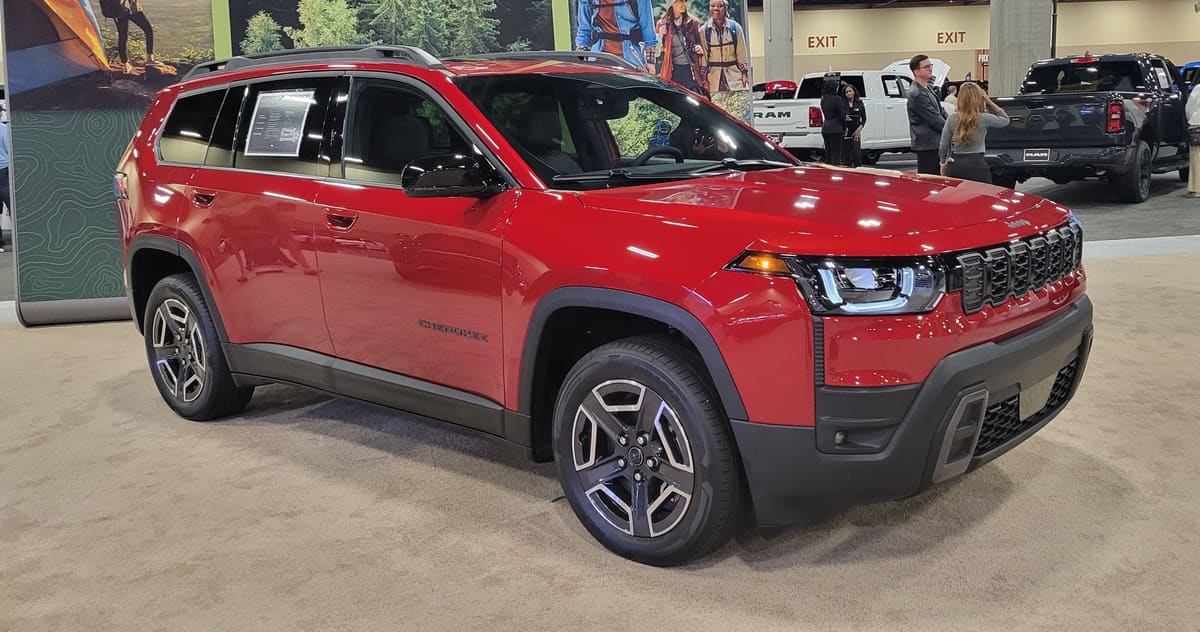
The Jeep Cherokee has a mixed reputation for reliability, with varying performance across different model years. While some years show commendable dependability, others have faced challenges with common issues. Understanding these trends can help potential buyers make informed decisions.
Overview of Jeep Cherokee Reliability
The Jeep Cherokee has been in production since 1974, with several generations showcasing different levels of reliability. Early models were often praised for their ruggedness, while more recent iterations have had a more complex relationship with dependability. According to DVSA MOT data, the Cherokee’s reliability varies significantly across its production years.
The Cherokee’s reputation has been shaped by both its off-road capabilities and its on-road performance. Some owners report positive experiences, while others highlight issues that can affect long-term reliability. This inconsistency makes it essential to consider specific model years when assessing dependability.
Early Models (1974-2001)
The early Jeep Cherokees, particularly those from the 1980s and 1990s, are often regarded as reliable vehicles. Their simple engineering and robust construction contributed to a loyal following. Owners appreciated their off-road prowess and durability, making them popular choices for adventure seekers.
However, these models are not without their faults. Common issues included rust, especially in older vehicles, and problems with the transmission in some models. Despite these concerns, many early Cherokees remain on the road today, a testament to their overall reliability.
Third Generation (2002-2007)
The third generation of the Jeep Cherokee, produced from 2002 to 2007, saw improvements in comfort and technology. However, this period also marked a decline in reliability, with several reports of electrical issues and engine problems.
Despite the challenges, many owners still appreciate the driving experience offered by these Cherokees. The blend of off-road capability and on-road comfort appeals to a wide range of drivers. Regular maintenance and attention to common issues can help mitigate some of the reliability concerns associated with this generation.
Fourth Generation (2008-2017)
The fourth generation of the Jeep Cherokee, launched in 2008, introduced a new design and modern features. While this generation aimed to compete with more mainstream SUVs, it faced criticism for reliability. Reports of transmission issues and electronic malfunctions were common, leading to a mixed reception among owners.
The DVSA MOT data suggests that this generation has a higher rate of failures compared to earlier models. However, many drivers still find the Cherokee appealing for its off-road capabilities and spacious interior. Regular servicing and addressing known issues can enhance the reliability of these vehicles.
Fifth Generation (2018-Present)
The current fifth generation of the Jeep Cherokee, introduced in 2018, has made strides in terms of technology and safety features. However, reliability remains a concern for some owners.
Despite these challenges, the latest Cherokee models offer a comfortable ride and advanced features that appeal to modern drivers. Buyers should be aware of potential reliability concerns and consider purchasing extended warranties or service plans to cover any unexpected issues.
Factors Affecting Reliability
Several factors influence the reliability of the Jeep Cherokee, including maintenance, driving habits, and environmental conditions. Regular servicing and prompt attention to issues can significantly impact a vehicle’s longevity. Owners who adhere to recommended maintenance schedules often report better reliability.
Driving conditions also play a role in the Cherokee’s performance. Off-road driving can lead to wear and tear, while urban driving may expose the vehicle to different stressors. Understanding how these factors affect reliability can help owners make informed decisions about their vehicles.
Owner Experiences and Reviews
Owner experiences with the Jeep Cherokee vary widely, with some praising its off-road capabilities and comfort, while others express frustration over reliability issues. Online forums and review sites often highlight common problems, such as electrical faults and transmission issues, particularly in certain model years.
Many owners recommend thorough research before purchasing a used Cherokee, focusing on specific years known for better reliability. Engaging with other Jeep enthusiasts can provide valuable insights into the strengths and weaknesses of different models, helping potential buyers make informed choices.
the Jeep Cherokee’s reliability is a complex topic influenced by model year, maintenance, and individual experiences. By understanding these factors, potential buyers can better assess the dependability of this iconic SUV.
Jeep Cherokee recall record
32 recalls have been issued for the Jeep Cherokee, between 1996 and 2026.
Two speed power transfer unit failure. Loss of power.
R/2026/138Issued 26 June 2026
Affected vehicles may have been built with an improperly seated input shaft snap ring on the power transfer unit (PTU). An input shaft snap ring that is not fully seated may allow uncontrolled movement of the input shaft inward which can cause an unexpected loss of motive power or loss of PARK function while stationary. A loss of motive power can cause a vehicle crash without prior warning. A loss of PARK function can cause a vehicle crash without prior warning and/or injury to others outside the vehicle.
Remedy:Install modified software in the Drivetrain Control Module (DTCM) and the PTU to detect and monitor for excessive wear within the PTU. If a PTU failure is confirmed by the software the PTU will be replaced.
Affects cars built Mar 2017 to Feb 2019
Jeep Cherokee 2014-2014 Power liftgate module
R/2024/230Issued 14 June 2024
On affected vehicles the power liftgate control module may experience a short circuit. An electrical short in the power liftgate module may lead to a vehicle fire with the ignition on or off.
Remedy:Relocate the power liftgate module to the D Pillar and install water barrier/curtain
Affects cars built Feb 2013 to Sept 2015
Reverse lamp height
R/2024/149Issued 4 June 2024
On certain vehicles built with a specific suspension package the reverse lamps may be above the UN ECE 48.04 height requirement.
Remedy:Install the reverse lamp in accordance with the UN ECE 48.04 height requirement.
Affects cars built Jul 2013 to Dec 2017
The Power Transfer Unit (PTU) may allow relative movement between the input splines and the transmission output shaft
R/2023/196Issued 4 August 2023
On affected vehicles relative movement between the differential input splines and the transmission output shaft in the area of the power transfer unit�wear of the input splines�cannot�be�ruled�out.�
Remedy:Reprogram of the Drive Train Control Module and Electric Park Brake.
Affects cars built Sept 2015 to Oct 2016
28 older recalls not shown.
A recall applies to a build range, not to every car of this model. Check a registration to see whether one specific vehicle has an outstanding recall.
Jeep Cherokee MOT record
From 8,343 recorded MOT tests, 26.9% failed.
| Registered | Tests | Failed | Median mileage |
|---|---|---|---|
| 2018 | 308 | 14.6% | 55,803 mi |
| 2017 | 544 | 19.7% | 62,503 mi |
| 2016 | 1,398 | 20.2% | 73,398 mi |
| 2015 | 1,942 | 22.7% | 83,082 mi |
| 2014 | 1,143 | 27.7% | 87,633 mi |
| 2007 | 337 | 37.1% | 105,372 mi |
| 2006 | 464 | 39.2% | 105,835 mi |
| 2005 | 456 | 33.1% | 107,006 mi |
Most common reasons for failure
- A suspension pin, bush or joint excessively worn35.9%
- Tyre tread depth not in accordance with the requirements22.8%
- Brake disc or drum excessively weakened, insecure or fractured15.1%
- Fluid leaking excessively and likely to harm the environment or to pose a safety risk to other road users13.7%
- a brake lining or pad worn below 1.5mm12.5%
Figures cover every Jeep Cherokee tested in the DVSA dataset, not this specific car. Check a registration for the actual history of one vehicle.
Frequently asked questions
How reliable is the Jeep Cherokee?
The Jeep Cherokee generally has a mixed reputation for reliability. While some owners report positive experiences, others have encountered issues, particularly with older models.
What common problems should I look out for in a used Jeep Cherokee?
Common issues include electrical problems, transmission concerns, and suspension wear. It's advisable to have a thorough inspection before purchasing a used model.
Are parts for the Jeep Cherokee easy to find?
Yes, parts for the Jeep Cherokee are relatively easy to find in the UK, thanks to its popularity. Both new and used parts are available from various suppliers.
How does the Jeep Cherokee compare to other SUVs in terms of reliability?
Compared to other SUVs, the Jeep Cherokee may not rank as highly in reliability. Brands like Toyota and Honda often receive better ratings for dependability.
What is the average lifespan of a Jeep Cherokee?
With proper maintenance, a Jeep Cherokee can last over 150,000 miles. Regular servicing and care are key to extending its lifespan.
Is the Jeep Cherokee expensive to maintain?
Maintenance costs for the Jeep Cherokee can be higher than average, especially if repairs are needed. It's important to budget for routine servicing and potential repairs.
Do Jeep Cherokees hold their value well?
Jeep Cherokees tend to depreciate faster than some competitors. However, well-maintained models can still retain a reasonable resale value.
Are there any recalls on the Jeep Cherokee I should be aware of?
Recalls are issued against individual vehicles rather than a model as a whole, so a model-level yes or no would be guesswork. Enter the registration on Honest Car Check and we check the DVSA record for that specific car. Where DVSA holds no status, confirm it with a franchised dealer using the VIN.
Sources
- DVSA anonymised MOT tests and results (Open Government Licence v3.0)
- DVSA vehicle safety recalls (Open Government Licence v3.0)