Top fixes
Jeep Cherokee top fixes: how owners handle the common issues
Practical fixes for the common Jeep Cherokee faults owners run into.
Updated 23rd June 2026 DVSA data: Across 8,343 recorded MOT tests, 26.9% failed.
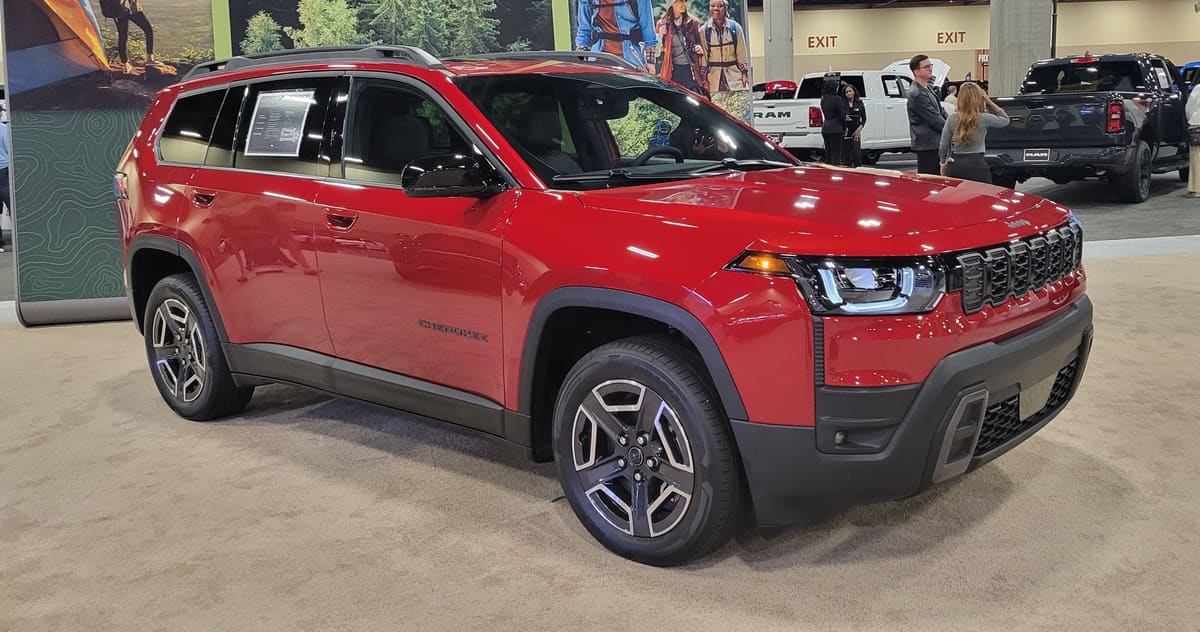
Jeep Cherokee owners often report a range of common issues, but many can be resolved with practical fixes. From electrical glitches to suspension problems, understanding these issues can help you maintain your vehicle effectively. Here are some of the most frequent concerns and their solutions.
Electrical Issues
One of the most frequently reported problems with the Jeep Cherokee is electrical faults. Owners often experience issues with the dashboard lights, power windows, and even the ignition system.
To fix these issues, start by checking the battery and its connections. Corroded terminals can lead to poor electrical performance. If the battery is in good condition, inspect the fuses related to the malfunctioning components. Replacing blown fuses can often resolve minor electrical glitches. For persistent issues, consider consulting a professional to diagnose potential wiring faults.
Transmission Problems
Transmission issues are another common complaint among Jeep Cherokee owners. Symptoms may include rough shifting, slipping gears, or delayed engagement.
Regular maintenance is crucial for preventing transmission problems. Ensure that the transmission fluid is at the correct level and is in good condition. If the fluid appears dark or has a burnt smell, it may need to be replaced. If issues persist, a professional inspection may be necessary to identify potential internal problems or software updates that can enhance performance.
Suspension Concerns
Many Jeep Cherokee owners report suspension-related issues, such as a bumpy ride or excessive noise when driving over bumps. These problems can stem from worn-out components like shock absorbers or struts.
To address suspension concerns, start by inspecting the shock absorbers for leaks or damage. If they are worn, replacing them can significantly improve ride quality. Additionally, check the suspension bushings for wear, as these can also contribute to noise and instability. Regular alignment checks can prevent uneven tyre wear and prolong the lifespan of suspension components.
Engine Performance Issues
Engine performance problems can manifest as poor acceleration, rough idling, or decreased fuel efficiency. These issues can often be traced back to faulty sensors or clogged filters.
Begin by checking the air filter and fuel filter, as clogged filters can restrict airflow and fuel delivery. Replacing these filters is a straightforward fix that can enhance engine performance. Additionally, consider using a diagnostic tool to check for fault codes that may indicate sensor issues. Replacing malfunctioning sensors can restore proper engine function and efficiency.
Brake System Problems
Brake issues are critical to address for safety reasons. Common problems reported by Jeep Cherokee owners include squeaking brakes, a spongy brake pedal, or warning lights on the dashboard.
Start by inspecting the brake pads and rotors for wear. Worn pads should be replaced promptly to avoid damaging the rotors. If the brake pedal feels spongy, it may indicate air in the brake lines or low fluid levels. Bleeding the brakes can eliminate air bubbles and restore proper pedal feel. Regular maintenance of the brake system is essential for ensuring safety on the road.
Cooling System Failures
Overheating is a common concern among Jeep Cherokee owners, often due to cooling system failures. Symptoms may include a rising temperature gauge or coolant leaks.
To prevent overheating, regularly check the coolant level and inspect for leaks in hoses or the radiator. If the coolant is low, top it up with the appropriate mixture. A malfunctioning thermostat can also cause overheating, so testing and replacing it may be necessary. Regular maintenance of the cooling system can help avoid costly repairs down the line.
By addressing these common issues with practical fixes, Jeep Cherokee owners can enhance their vehicle’s reliability and performance. Regular maintenance and prompt attention to problems can lead to a more enjoyable driving experience.
Jeep Cherokee recall record
32 recalls have been issued for the Jeep Cherokee, between 1996 and 2026.
Two speed power transfer unit failure. Loss of power.
R/2026/138Issued 26 June 2026
Affected vehicles may have been built with an improperly seated input shaft snap ring on the power transfer unit (PTU). An input shaft snap ring that is not fully seated may allow uncontrolled movement of the input shaft inward which can cause an unexpected loss of motive power or loss of PARK function while stationary. A loss of motive power can cause a vehicle crash without prior warning. A loss of PARK function can cause a vehicle crash without prior warning and/or injury to others outside the vehicle.
Remedy:Install modified software in the Drivetrain Control Module (DTCM) and the PTU to detect and monitor for excessive wear within the PTU. If a PTU failure is confirmed by the software the PTU will be replaced.
Affects cars built Mar 2017 to Feb 2019
Jeep Cherokee 2014-2014 Power liftgate module
R/2024/230Issued 14 June 2024
On affected vehicles the power liftgate control module may experience a short circuit. An electrical short in the power liftgate module may lead to a vehicle fire with the ignition on or off.
Remedy:Relocate the power liftgate module to the D Pillar and install water barrier/curtain
Affects cars built Feb 2013 to Sept 2015
Reverse lamp height
R/2024/149Issued 4 June 2024
On certain vehicles built with a specific suspension package the reverse lamps may be above the UN ECE 48.04 height requirement.
Remedy:Install the reverse lamp in accordance with the UN ECE 48.04 height requirement.
Affects cars built Jul 2013 to Dec 2017
The Power Transfer Unit (PTU) may allow relative movement between the input splines and the transmission output shaft
R/2023/196Issued 4 August 2023
On affected vehicles relative movement between the differential input splines and the transmission output shaft in the area of the power transfer unit�wear of the input splines�cannot�be�ruled�out.�
Remedy:Reprogram of the Drive Train Control Module and Electric Park Brake.
Affects cars built Sept 2015 to Oct 2016
28 older recalls not shown.
A recall applies to a build range, not to every car of this model. Check a registration to see whether one specific vehicle has an outstanding recall.
Jeep Cherokee MOT record
From 8,343 recorded MOT tests, 26.9% failed.
| Registered | Tests | Failed | Median mileage |
|---|---|---|---|
| 2018 | 308 | 14.6% | 55,803 mi |
| 2017 | 544 | 19.7% | 62,503 mi |
| 2016 | 1,398 | 20.2% | 73,398 mi |
| 2015 | 1,942 | 22.7% | 83,082 mi |
| 2014 | 1,143 | 27.7% | 87,633 mi |
| 2007 | 337 | 37.1% | 105,372 mi |
| 2006 | 464 | 39.2% | 105,835 mi |
| 2005 | 456 | 33.1% | 107,006 mi |
Most common reasons for failure
- A suspension pin, bush or joint excessively worn35.9%
- Tyre tread depth not in accordance with the requirements22.8%
- Brake disc or drum excessively weakened, insecure or fractured15.1%
- Fluid leaking excessively and likely to harm the environment or to pose a safety risk to other road users13.7%
- a brake lining or pad worn below 1.5mm12.5%
Figures cover every Jeep Cherokee tested in the DVSA dataset, not this specific car. Check a registration for the actual history of one vehicle.
Frequently asked questions
What are common issues with the Jeep Cherokee?
Common issues with the Jeep Cherokee include electrical problems, transmission issues, and engine performance concerns. Regular maintenance can help mitigate some of these problems.
How can I tell if my Jeep Cherokee needs repairs?
Signs that your Jeep Cherokee may need repairs include unusual noises, warning lights on the dashboard, and changes in driving performance. If you notice any of these, it's best to get a professional inspection.
Are Jeep Cherokees expensive to repair?
Repair costs for Jeep Cherokees can vary depending on the issue and the model year. Generally, parts and labour can be more costly than average, so it's wise to budget for potential repairs.
What should I check before buying a used Jeep Cherokee?
Before buying a used Jeep Cherokee, check the service history, look for signs of rust or damage, and ensure all electrical components are functioning. A thorough vehicle check can also reveal hidden issues.
How often should I service my Jeep Cherokee?
It is recommended to service your Jeep Cherokee every 6,000 to 8,000 miles or at least once a year. Regular servicing helps maintain performance and can prevent costly repairs down the line.
Can I perform basic repairs on my Jeep Cherokee myself?
Yes, many basic repairs, such as changing the oil or replacing air filters, can be done at home with the right tools and knowledge. However, for more complex issues, it's advisable to consult a professional.
What are the signs of a failing transmission in a Jeep Cherokee?
Signs of a failing transmission include slipping gears, delayed shifting, and unusual noises when changing gears. If you experience these symptoms, it's important to have your vehicle checked as soon as possible.
Sources
- DVSA anonymised MOT tests and results (Open Government Licence v3.0)
- DVSA vehicle safety recalls (Open Government Licence v3.0)