Running costs
Peugeot 208 running costs: what UK ownership really costs
Peugeot 208 UK running costs: fuel or electric, insurance group, road tax, servicing and depreciation.
Updated 20th September 2026 DVSA data: Across 217,021 recorded MOT tests, 23.3% failed.
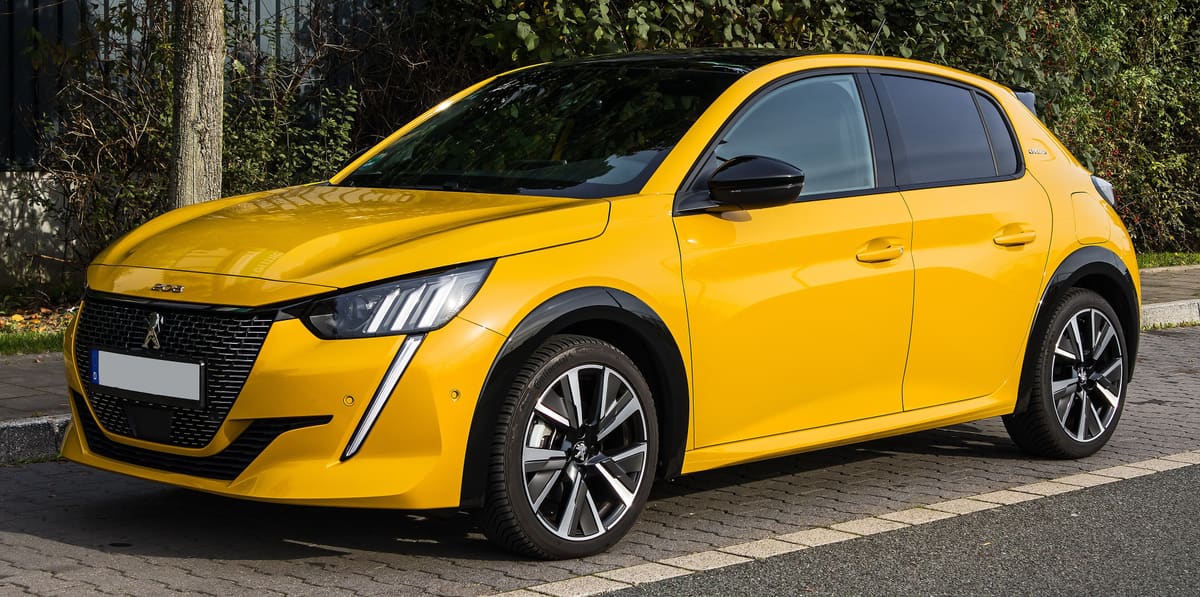
The Peugeot 208’s running costs are shaped by its tax category, insurance group, servicing requirements, and depreciation profile. Its tax treatment depends on emissions and fuel type, while insurance costs reflect engine size, safety features, and driver profile. Servicing is generally straightforward but varies by engine and trim. The 208 holds value reasonably well, influenced by demand for small hatchbacks and Peugeot’s brand perception.
Vehicle Tax and How It Affects Running Costs
The cost of vehicle tax for the Peugeot 208 depends primarily on its CO2 emissions and fuel type, as the UK government bases road tax rates on these factors. Petrol and diesel models are taxed differently, with diesel variants often subject to additional surcharges if they do not meet certain emissions standards. Electric and plug-in hybrid versions benefit from lower or zero tax bands, reflecting government incentives to promote cleaner vehicles.
Tax bands are structured so that lower-emission cars pay less, encouraging buyers to consider more environmentally friendly options. This means that a 208 with a smaller petrol engine or a hybrid powertrain will typically incur lower annual tax than a larger, more polluting diesel version. Buyers should check the official government vehicle tax calculator to see the exact rates for the specific 208 trim and engine they are interested in, as these can vary significantly.
Additionally, first-year tax rates for new cars are often higher and linked closely to emissions, which can affect the initial cost of ownership. After the first year, the standard rate applies, which is generally lower but still influenced by the vehicle’s environmental credentials.
Insurance Group and Its Impact on Premiums
Insurance costs for the Peugeot 208 are influenced by the car’s insurance group rating, which is determined by factors such as engine size, repair costs, safety features, and theft risk. Smaller engines and models with advanced safety technology tend to fall into lower insurance groups, making them cheaper to insure. Conversely, sportier trims or those with larger engines may be placed in higher groups, pushing premiums up.
The 208’s popularity as a small hatchback means it is often seen as a practical and safe choice, which can help keep insurance costs reasonable. However, younger drivers or those with limited experience may still face higher premiums due to the car’s appeal to these demographics. Insurance providers also consider the driver’s location, age, and claims history, so individual quotes can vary widely.
To get an accurate insurance cost, it is advisable to obtain quotes from multiple insurers and compare them. Many comparison websites allow you to enter the Peugeot 208’s details alongside your personal information to see how the insurance group affects the premium. The car’s safety equipment, such as electronic stability control and multiple airbags, can also contribute to lower insurance costs by reducing the risk of injury or accident.
Servicing and Maintenance Demands
The Peugeot 208 generally requires routine servicing at intervals recommended by the manufacturer, which typically include oil changes, filter replacements, brake checks, and fluid top-ups. The servicing schedule can vary depending on the engine type. petrol, diesel, or electric. and the trim level, with some versions needing more frequent attention due to complexity or performance demands.
Servicing costs for the 208 tend to be moderate compared to larger or more complex vehicles, as it is designed as a practical city car with relatively straightforward mechanical components. Diesel engines may require additional maintenance related to emissions control systems, such as diesel particulate filters, which can add to servicing expenses if not properly maintained.
Parts availability and labour costs also influence servicing bills. Peugeot has a widespread dealer network in the UK, which can help keep parts reasonably priced and service convenient. Independent garages familiar with Peugeot models may offer competitive rates, but it is important to ensure they use genuine or approved parts to maintain warranty and reliability.
Tyre replacement and brake wear are typical maintenance items that will affect running costs over time. The 208’s compact size means it uses smaller tyres, which are generally cheaper to replace than those on larger cars. Regular servicing helps maintain fuel efficiency and reliability, reducing the risk of costly repairs.
Depreciation and Residual Value
The Peugeot 208 holds its value fairly well within the small hatchback segment, benefiting from strong demand for compact, economical cars in urban areas. Its reputation for style, comfort, and efficiency helps maintain interest in the used car market, which supports better resale prices compared to less popular models.
Depreciation is influenced by factors such as mileage, condition, service history, and model year. Well-maintained 208s with full service records tend to retain value better, as buyers are reassured by evidence of proper care. Trim levels and optional equipment can also affect resale prices, with higher-spec versions often commanding a premium.
The rise of electric and hybrid variants in the 208 range has introduced some variation in depreciation patterns. Electric models may hold value differently due to battery longevity concerns and evolving technology, so prospective buyers should consider how these factors impact resale when choosing a version.
Market trends, including fuel price fluctuations and regulatory changes, can also influence depreciation. For example, increasing restrictions on older diesel vehicles in urban centres might reduce demand for diesel 208s, accelerating their depreciation relative to petrol or electric models.
Fuel Costs and Efficiency Considerations
Fuel costs are a significant part of running the Peugeot 208, with efficiency varying by engine type and driving style. Smaller petrol engines typically offer good economy for city and suburban driving, while diesel versions may excel on longer motorway journeys. Hybrid and electric variants provide further savings by reducing or eliminating fuel consumption altogether.
The 208’s lightweight design and aerodynamic shape contribute to efficient fuel use, but real-world consumption depends on factors such as traffic conditions, load, and maintenance. Regular servicing, correct tyre pressures, and smooth driving habits can all help optimise fuel economy and reduce running costs.
Fuel prices fluctuate over time, so the overall cost of running a petrol or diesel 208 will vary accordingly. Electric models avoid traditional fuel costs but incur electricity charges, which are generally lower and more stable. Charging infrastructure and home electricity tariffs should be considered when evaluating total running costs for electric or plug-in hybrid versions.
Drivers should compare official fuel economy figures for the specific 208 trim they are interested in, but also seek real-world feedback where possible, as laboratory test results often differ from everyday use.
Tyres and Other Consumables
Tyres are a routine but essential running cost for the Peugeot 208, with replacement frequency depending on mileage, road conditions, and driving style. The 208’s compact size means it uses smaller, more affordable tyres compared to larger vehicles, which helps keep costs down.
Choosing the right tyre type can influence both cost and performance. Budget tyres reduce initial outlay but may wear faster or offer less grip, while premium tyres last longer and improve safety but come at a higher price. Seasonal considerations, such as winter tyres, may also add to running costs in certain regions.
Other consumables include brake pads, wiper blades, and bulbs, which wear out over time and require replacement. These items are generally inexpensive but should be factored into the overall cost of ownership. Regular checks during servicing help identify wear early, preventing more expensive repairs later.
Maintaining correct tyre pressures and alignment not only extends tyre life but also improves fuel efficiency and handling, contributing to lower running costs and safer driving.
Peugeot 208 recall record
56 recalls have been issued for the Peugeot 208, between 2012 and 2026.
Peugeot 208 Horn sound volume
R/2026/231Issued 4 June 2026
Affected vehicle have a horn volume which does not comply with regulatory requirements.
Remedy:Replace the horn with one of a higher volume.
Affects cars built Sept 2019 to Jul 2022
Front lower control arm fasteningg Loose
R/2026/206Issued 19 May 2026
On affected vehicles the front suspension lower control arm upper bolts may not have been tightened according to specification during assembly.
Remedy:Check the bolts for the correct torque and replace if necessary.
Affects cars built Jul 2025 to Sept 2025
BCM software missing telltale if LKA unavailable
R/2026/183Issued 27 April 2026
On affected vehicles the Lane Keep Assist tell-tale fails to illuminate if the front camera is blocked meaning no warning light appears in the instrument cluster.
Remedy:Update the Body Control Module software.
Affects cars built Apr 2024 to Apr 2025
Alternator protection
R/2026/071Issued 9 March 2026
Affected vehicles may have been assembled with contact or with a reduced clearance between the Gasoline Particulate Filter pipe and the pole protection cap of the 48V Belt Starter Generator. There is a possibility of contact between these components leading to water infiltration and an electrical arch which could trigger a thermal event.
Remedy:Replace the pole protection cap of the 48V Belt Starter Generator. Check the distance between the Gasoline Particulate Filter pipe and the pole protection cap of the 48V Belt Starter Generator and re‑position or replace the pipe if required.
Affects cars built Jun 2023 to Jan 2026
52 older recalls not shown.
A recall applies to a build range, not to every car of this model. Check a registration to see whether one specific vehicle has an outstanding recall.
Peugeot 208 MOT record
From 217,021 recorded MOT tests, 23.3% failed.
| Registered | Tests | Failed | Median mileage |
|---|---|---|---|
| 2023 | 796 | 4.5% | 19,060 mi |
| 2022 | 16,659 | 9.8% | 19,006 mi |
| 2021 | 14,158 | 13.4% | 26,818 mi |
| 2020 | 13,041 | 15.8% | 30,576 mi |
| 2019 | 16,684 | 16.3% | 34,837 mi |
| 2018 | 14,978 | 19.7% | 42,444 mi |
| 2017 | 17,263 | 22.4% | 50,289 mi |
| 2016 | 25,172 | 23.3% | 57,012 mi |
Most common reasons for failure
- Tyre tread depth not in accordance with the requirements25.6%
- A suspension pin, bush or joint excessively worn23.8%
- A tyre seriously damaged21.4%
- Exhaust system leaking or insecure15.8%
- Brake disc or drum excessively weakened, insecure or fractured13.4%
Figures cover every Peugeot 208 tested in the DVSA dataset, not this specific car. Check a registration for the actual history of one vehicle.
Peugeot 208 official figures
Median across 34 variants on sale, electricity, petrol, petrol electric.
- Combined economy
- 55.1 mpg
- WLTP median across variants
- CO2 emissions
- 110 g/km
- Sets the first-year tax rate
- Electric range
- 228.5 miles
- Manufacturer WLTP figure
Official figures for new cars. Real economy varies with driving, load and conditions.
Frequently asked questions
What should I check to keep the Peugeot 208’s engine running efficiently?
Regularly inspect the timing belt for wear or cracks, as it is crucial for engine timing. Also, keep an eye on the engine oil level and change it according to the manufacturer’s schedule to avoid damage to components like the camshaft and pistons.
How often does the Peugeot 208 need brake pad replacement?
Brake pads on the Peugeot 208 typically need checking every 10,000 miles or during routine servicing. Look out for squealing noises or a spongy brake pedal, which indicate the pads are worn and should be replaced to maintain safe braking performance.
Are Peugeot 208 tyres expensive to replace and what should I look for?
Tyres for the Peugeot 208 vary by trim, but you should regularly check tread depth and look for uneven wear patterns. Uneven wear might suggest an alignment issue, which a garage can correct to extend tyre life and improve handling.
What are the typical signs of a failing clutch on a Peugeot 208?
If you notice difficulty changing gears, a burning smell, or the clutch pedal feels spongy or sticks, these are signs the clutch may be wearing out. A garage can inspect the clutch plate and release bearing to confirm the issue.
Does the Peugeot 208 require special attention to its battery?
The Peugeot 208’s battery should be checked regularly, especially if the car has start-stop technology. Look for corrosion on the terminals and ensure the battery holds charge, as a failing battery can trigger warning lights on the dashboard.
How can I reduce running costs related to the Peugeot 208’s air conditioning system?
Maintaining the air conditioning involves checking the refrigerant level and ensuring the compressor is working properly. A poorly performing AC can strain the engine and increase fuel consumption, so have a garage inspect the system if cooling feels weak.
What maintenance does the Peugeot 208’s diesel particulate filter (DPF) need?
For diesel versions, the DPF requires regular regeneration to clear soot build-up. Short trips can prevent this process, causing warning lights to appear. Taking longer drives at higher speeds helps the filter self-clean and avoid costly replacements.
Is servicing the Peugeot 208 expensive compared to other small cars?
Servicing costs depend on the specific trim and engine, but Peugeot parts like oil filters and spark plugs are widely available. Routine checks such as replacing the air filter and inspecting the suspension are straightforward jobs that help avoid bigger repairs.
Sources
- DVSA anonymised MOT tests and results (Open Government Licence v3.0)
- VCA new car fuel consumption and emissions data (Open Government Licence v3.0)
- DVSA vehicle safety recalls (Open Government Licence v3.0)