Running costs
Renault Clio running costs: what UK ownership really costs
Renault Clio UK running costs: fuel or electric, insurance group, road tax, servicing and depreciation.
Updated 21st September 2026 DVSA data: Across 303,436 recorded MOT tests, 36.8% failed.
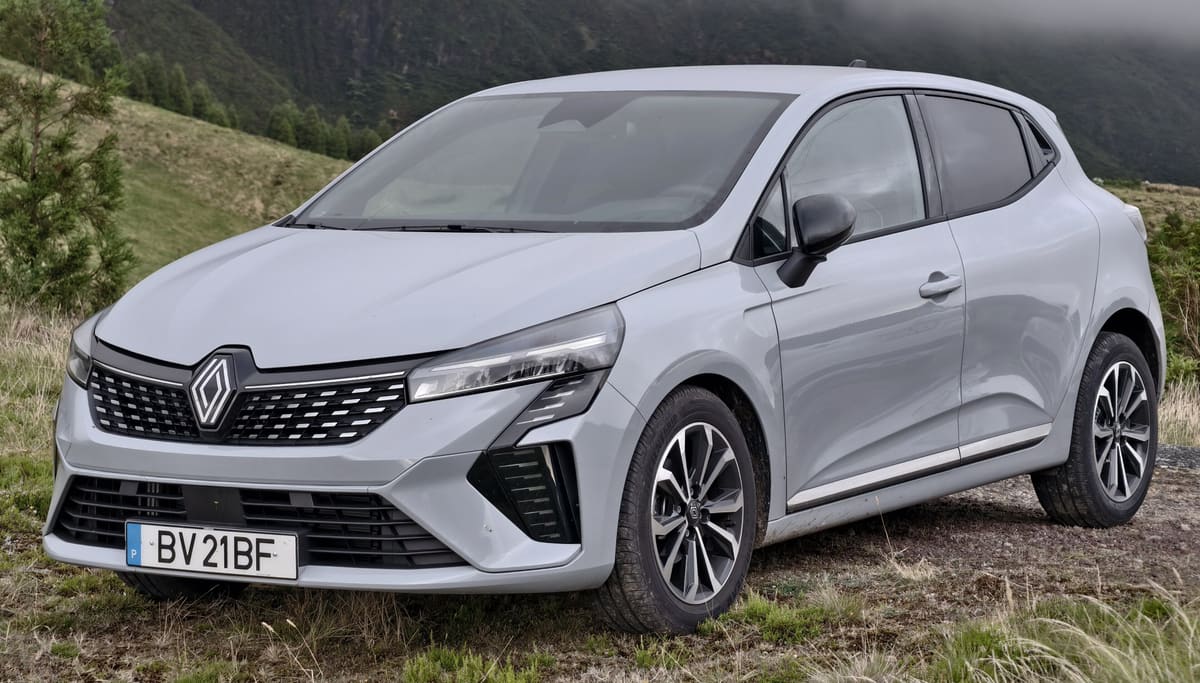
The Renault Clio’s running costs are influenced by several factors including its taxation category, insurance group, servicing demands, and depreciation profile. Its relatively modest engine sizes and efficient design often keep tax and insurance costs manageable, while servicing is straightforward but varies by model and age. Value retention is reasonable, reflecting its popularity and practicality.
Vehicle Taxation: How the UK System Affects the Clio
The cost of vehicle tax for a Renault Clio depends primarily on its CO2 emissions and fuel type, as set out by the UK government’s Vehicle Excise Duty (VED) system. Petrol and diesel models are taxed differently, with lower-emission versions attracting reduced rates or exemptions.
Newer Clios with smaller, efficient engines typically fall into lower tax bands, which helps keep annual running costs down. Diesel variants may face higher tax charges due to stricter emissions regulations, especially if they do not meet the latest standards. Electric or hybrid versions benefit from favourable tax treatment, often paying little or no VED in the first year and reduced rates thereafter.
It is important to check the exact tax band for the specific Clio model and trim you are considering, as this can vary significantly. The official government website provides a tool to look up vehicle tax rates based on registration and fuel type, ensuring you understand the ongoing cost implications before purchase.
Insurance Groups and What Pushes Costs Up or Down
Insurance premiums for the Renault Clio are influenced by its assigned insurance group, which reflects factors such as engine size, repair costs, safety features, and theft risk. The Clio generally sits in moderate insurance groups, making it accessible for a wide range of drivers, including younger or less experienced ones.
Models with smaller engines and fewer sporty features tend to fall into lower insurance groups, reducing premiums. Conversely, performance-oriented trims or those with more powerful engines can push the insurance group higher, increasing costs. Additionally, safety equipment such as multiple airbags and electronic stability control can help lower insurance premiums by reducing the risk of injury and accident claims.
Insurance quotes will vary based on personal circumstances, so it is advisable to obtain multiple quotes from comparison sites or insurers directly. This approach helps identify the best deal and understand how the Clio’s insurance group interacts with your profile to affect the final premium.
Servicing and Maintenance: What to Expect
The Renault Clio’s servicing requirements are generally straightforward, reflecting its design as a compact, mass-market hatchback. Routine maintenance includes oil and filter changes, brake inspections, tyre rotations, and checks on key systems like the cooling and exhaust.
The frequency and cost of servicing can depend on the engine type and age of the vehicle. Petrol models often have simpler maintenance needs compared to diesel variants, which may require additional attention to components such as particulate filters. Hybrid or electric versions have different servicing schedules, often with fewer mechanical parts requiring regular replacement.
Parts availability and labour costs are typically reasonable due to the Clio’s popularity and widespread dealer network. However, servicing costs can rise if the car is out of warranty or has higher mileage. It is wise to follow the manufacturer’s recommended service intervals and keep a full service history to maintain reliability and resale value.
Fuel Economy and Running Costs
Fuel economy is a key factor in the Renault Clio’s running costs, influenced by engine size, transmission type, and driving style. Smaller engines and manual gearboxes generally offer better fuel efficiency, while larger or turbocharged engines may consume more fuel but provide greater performance.
The Clio’s lightweight construction and aerodynamic shape help improve fuel consumption, especially in urban and suburban driving conditions. Hybrid versions, where available, can offer further savings by combining petrol engines with electric motors to reduce fuel use in stop-start traffic.
Fuel prices fluctuate, so it is important to consider how the Clio’s fuel consumption aligns with your typical driving patterns. Choosing the right engine and trim for your needs can help balance performance with economy, keeping overall running costs manageable.
Depreciation and How Well the Clio Holds Its Value
The Renault Clio tends to hold its value reasonably well compared to some other superminis, thanks to its enduring popularity, practicality, and reputation for reliability. Depreciation is influenced by factors such as model year, condition, mileage, and market demand.
Newer models with up-to-date technology and efficient engines generally retain value better than older versions. Special editions or trims with desirable features may also command higher resale prices. Conversely, high-mileage cars or those with a poor service history can depreciate more quickly.
Regular maintenance and keeping the car in good condition are key to preserving value. Prospective buyers should research the specific Clio variant they are interested in to understand its typical depreciation curve and resale prospects.
Summary of Running Cost Drivers
The Renault Clio’s running costs are shaped by the UK’s vehicle tax system, insurance group classification, servicing demands, fuel economy, and depreciation trends. Its efficient engines and modest size often result in lower tax and insurance costs, while servicing is generally affordable and straightforward. Value retention is solid, reflecting the Clio’s status as a practical and popular choice in the supermini segment. Checking official sources for tax rates and obtaining personalised insurance quotes will provide the clearest picture of ongoing costs for any specific Clio model.
Renault Clio recall record
24 recalls have been issued for the Renault Clio, between 1993 and 2026.
Front lower arm Bolts
R/2026/096Issued 4 March 2026
For certain vehicles and as a preventative measure there is concern involving the locking nuts in the area of the front suspension lower arm ball joints for where loosening of the fixings cannot be ruled out.
Remedy:Check of the tightening of the front suspension lower arm ball joint nuts and if necessary replace both nuts
Affects cars built Oct 2025 to Oct 2025
Injection Computer Software Update
R/2026/094Issued 4 December 2025
For certain vehicles reprogramming of the injection computer is required. Without this software update it could lead to breakdown or the vehicle failing to start.
Remedy:Reprogramme the injection computer
Affects cars built Sept 2022 to Jul 2025
'POWER STEERING FAILURE' MESSAGE DISPLAYED ON DASHBOARD
R/2020/023Issued 4 February 2020
The message power steering failure displayed on the vehicles dashboard and a down grading of the power steering assistance
Remedy:The steering column will be replaced
Affects cars built Jun 2019 to Oct 2019
CONTACT BETWEEN THE POSITIVE ALTERNATOR WIRING AND THE ALTERNATOR CASING COULD CAUSE AN ELECTRICAL SHORT CIRCUIT
R/2020/015Issued 21 January 2020
Contact between the positive alternator wiring and the alternator casing which could cause an electrical short circuit.
Remedy:Modify the wiring route and if necessary replace the alternator
Affects cars built Jul 2019 to Jul 2019
20 older recalls not shown.
A recall applies to a build range, not to every car of this model. Check a registration to see whether one specific vehicle has an outstanding recall.
Renault Clio MOT record
From 303,436 recorded MOT tests, 36.8% failed.
| Registered | Tests | Failed | Median mileage |
|---|---|---|---|
| 2023 | 530 | 5.1% | 17,606 mi |
| 2022 | 7,748 | 9.4% | 19,812 mi |
| 2021 | 9,029 | 12.2% | 26,034 mi |
| 2020 | 10,551 | 14.1% | 30,551 mi |
| 2019 | 16,999 | 22.7% | 38,860 mi |
| 2018 | 19,443 | 27.1% | 45,129 mi |
| 2017 | 19,041 | 32.8% | 52,108 mi |
| 2016 | 22,071 | 37.9% | 58,959 mi |
Most common reasons for failure
- Tyre tread depth not in accordance with the requirements25.1%
- A suspension pin, bush or joint excessively worn22.7%
- A spring or spring component fractured or seriously weakened19.4%
- A tyre seriously damaged18.3%
- Brake pipe damaged or excessively corroded14.4%
Figures cover every Renault Clio tested in the DVSA dataset, not this specific car. Check a registration for the actual history of one vehicle.
Renault Clio official figures
Median across 72 variants on sale, petrol, petrol electric.
- Combined economy
- 64.2 mpg
- WLTP median across variants
- CO2 emissions
- 99 g/km
- Sets the first-year tax rate
Official figures for new cars. Real economy varies with driving, load and conditions.
Frequently asked questions
What should I check to keep the Renault Clio's engine running efficiently?
Regularly inspect the air filter and replace it if clogged, as a dirty filter can reduce engine performance. Also, keep an eye on the engine oil level and quality, changing it according to the service schedule to protect components like the camshaft and pistons.
How often does the Renault Clio need its timing belt replaced?
The timing belt is a crucial part that synchronises the engine's valves and pistons. Renault typically recommends replacement at specific intervals, so check your owner's manual. Ignoring this can lead to severe engine damage if the belt snaps.
Are there any warning lights specific to the Renault Clio I should watch for?
Yes, the Clio features a distinctive engine management light that can indicate issues with components like the lambda sensor or fuel injectors. If this light stays on, it is wise to have the car diagnosed promptly to avoid further damage.
What are typical maintenance tasks that affect the running costs of a Renault Clio?
Routine jobs such as brake pad replacement, tyre rotation, and coolant top-ups are essential. For example, worn brake pads can cause squealing and reduce braking efficiency, leading to more expensive repairs if left unchecked.
Does the Renault Clio require special attention to its diesel particulate filter (DPF)?
If your Clio is diesel, the DPF needs regular regeneration to prevent clogging. Short trips can cause soot build-up, so occasional longer drives at higher speeds help clear the filter and maintain performance.
How can I monitor the condition of the Renault Clio’s battery?
Check the battery terminals for corrosion and ensure they are tightly connected. The Clio’s electrical system relies on a healthy battery to power components like the ECU and starter motor, so a failing battery can cause starting issues or warning lights.
What should I know about the Renault Clio’s clutch wear and replacement?
The clutch can wear faster if you frequently drive in stop-start traffic or use it improperly. Signs of wear include slipping when accelerating or difficulty changing gears. A garage can inspect the clutch plate and pressure plate to assess condition.
Is there anything specific to check regarding the Renault Clio’s suspension for running costs?
Listen for knocking noises over bumps, which may indicate worn suspension bushes or shock absorbers. These parts affect ride comfort and handling, and replacing them can prevent uneven tyre wear and further damage.
Sources
- DVSA anonymised MOT tests and results (Open Government Licence v3.0)
- VCA new car fuel consumption and emissions data (Open Government Licence v3.0)
- DVSA vehicle safety recalls (Open Government Licence v3.0)