Top fixes
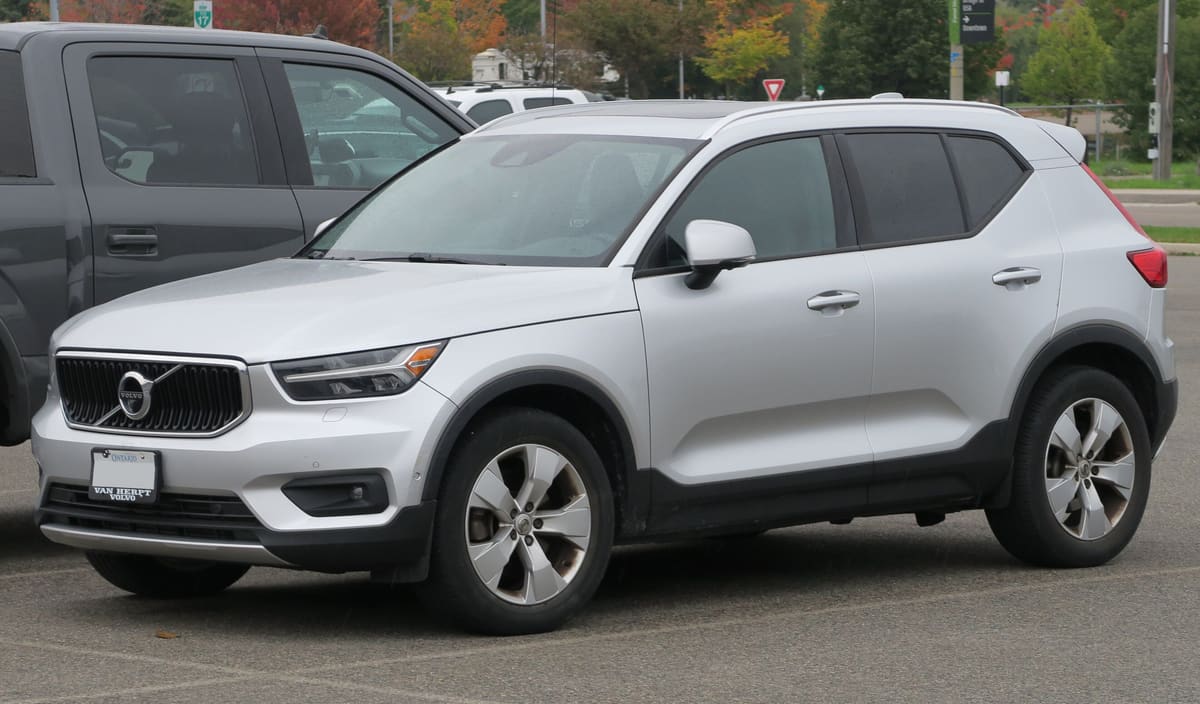
Top Volvo XC40 fixes every owner should know
Cheap, practical fixes for the Volvo XC40 faults you actually meet, with rough costs and what a garage will charge.
Updated 4th September 2026 DVSA data: Across 87,576 recorded MOT tests, 8.5% failed.
TL;DR
The Volvo XC40 has common faults including electrical issues, infotainment failures, brake problems, air conditioning failures, and suspension noises. Knowing these can help you save time and money.
Electrical Issues
One common fault in the XC40 is electrical problems, particularly with the battery management system. Symptoms include warning lights on the dashboard or issues with starting the car. The fix often involves checking the battery connections and replacing the battery if necessary.
DIY: If you have basic tools, you can check connections and replace the battery yourself.
Infotainment System Failures
Some owners report issues with the infotainment system freezing or rebooting unexpectedly. This can often be fixed by updating the software or performing a factory reset.
DIY: You can perform a software update via the vehicle’s settings menu. Cost: Updates are usually free.
Brake Problems
Braking issues, such as squeaking or grinding noises, are also common. These can indicate worn brake pads or discs. Replacing these components is essential for safety.
DIY: If you’re comfortable with brake work, you can replace pads and discs yourself.
Air Conditioning Failures
Another issue is the air conditioning system not blowing cold air. This is often due to a refrigerant leak or a faulty compressor.
DIY: Checking for simple leaks is possible, but compressor replacement is complex.
Suspension Noises
Many XC40 owners experience noise from the suspension, particularly over bumps. This could be due to worn shock absorbers or bushings.
DIY: Replacing bushings is feasible for a DIYer, but shock absorber replacement is more involved.
Volvo XC40 recall record
15 recalls have been issued for the Volvo XC40, between 2018 and 2026.
CMA Cell Modules
R/2026/272Issued 13 July 2026
On affected vehicles the High Voltage (HV) Battery may have a manufacturing defect which could cause the Battery Cells to overheat when the HV Battery is fully charged. In a worst-case scenario there is a risk of fire when the vehicle is parked up with a fully charged HV Battery.
Remedy:Check and replace the HV Battery Cells if necessary and install modified software.
Affects cars built Mar 2019 to Dec 2021
BCM2 SW – Safety Notice
R/2025/211Issued 23 June 2025
Affected vehicles may experience a temporary loss of braking functionality after coasting downhill with ‘B’ mode selected or when using One Pedal Drive. This could potentially lead to a collision.
Remedy:Install modified software via an Over the Air (OTA) update.
Affects cars built Oct 2020 to Jun 2025
Due to a software error the left rear indicator may stop working. Should this happen it will be an intermittent issue and a message will be shown in the driver display. By turning the indictor off and back on again the indicator should return to full functionality: if the warning message is no longer displayed the indicator has full functionality.
R/2024/012Issued 15 January 2024
Due to a software error the left rear indicator may stop working. Should this happen it will be an intermittent issue and a message will be shown in the driver display. By turning the indictor off and back on again the indicator should return to full functionality: if the warning message is no longer displayed the indicator has full functionality.
Remedy:Solution is to upgrade the software.
Affects cars built Oct 2022 to Dec 2023
During driving or idle the O-Ring may become twisted or break. Should this occur there could be an oil leak a message for low engine oil level displayed in the vehicle or an unusual smell in the cabin. In a worst case scenario this could cause a thermal event.
R/2023/263Issued 4 September 2023
During driving or idle the O-Ring may become twisted or break. Should this occur there could be an oil leak a message for low engine oil level displayed in the vehicle or an unusual smell in the cabin. In a worst case scenario this could cause a thermal event.
Remedy:Replace O-Ring
Affects cars built May 2021 to Jun 2023
11 older recalls not shown.
A recall applies to a build range, not to every car of this model. Check a registration to see whether one specific vehicle has an outstanding recall.
Volvo XC40 MOT record
From 87,576 recorded MOT tests, 8.5% failed.
| Registered | Tests | Failed | Median mileage |
|---|---|---|---|
| 2023 | 807 | 4.2% | 24,950 mi |
| 2022 | 16,546 | 6.4% | 25,930 mi |
| 2021 | 24,615 | 7.5% | 32,899 mi |
| 2020 | 24,158 | 8.7% | 38,158 mi |
| 2019 | 14,838 | 11.3% | 45,912 mi |
| 2018 | 6,612 | 11.3% | 52,866 mi |
Most common reasons for failure
- a brake lining or pad worn below 1.5mm27.9%
- Tyre tread depth not in accordance with the requirements26.9%
- A tyre seriously damaged26.5%
- Brake disc or drum excessively weakened, insecure or fractured9.6%
- Brake disc or drum significantly and obviously worn9.1%
Figures cover every Volvo XC40 tested in the DVSA dataset, not this specific car. Check a registration for the actual history of one vehicle.
Volvo XC40 official figures
Median across 54 variants on sale, electricity, electricity / petrol, petrol, petrol electric.
- Combined economy
- 42.1 mpg
- WLTP median across variants
- CO2 emissions
- 152 g/km
- Sets the first-year tax rate
- Electric range
- 262 miles
- Manufacturer WLTP figure
Official figures for new cars. Real economy varies with driving, load and conditions.
Frequently asked questions
What are common faults in the Volvo XC40?
Common faults include electrical issues, faulty brakes, and infotainment problems.
Can I fix the XC40 issues myself?
Some issues are DIY-friendly, while others may require a garage.
Is it worth repairing an XC40?
If the car is otherwise in good condition, repairs can be worth it.
Sources
- DVSA anonymised MOT tests and results (Open Government Licence v3.0)
- VCA new car fuel consumption and emissions data (Open Government Licence v3.0)
- DVSA vehicle safety recalls (Open Government Licence v3.0)